Homemade Protein Powder: Easy, Nutritious DIY Recipes
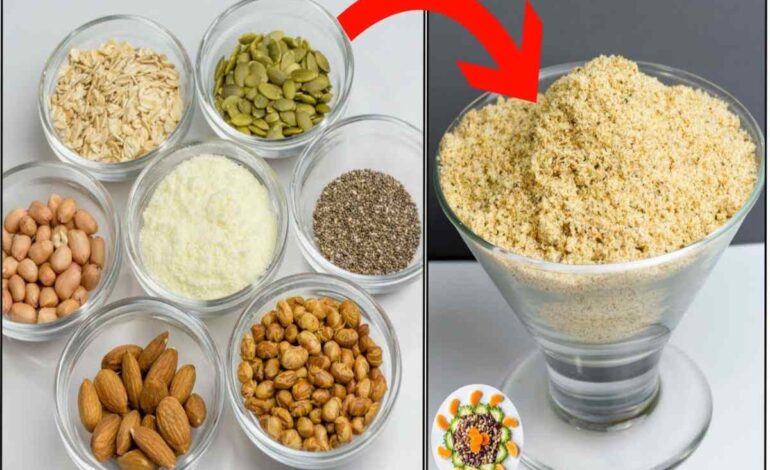
Homemade Protein Powder is not merely a cost-cutting trick but a more intelligent method to have control over what you eat.
Commercial protein powders usually include unnatural flavours, emulsifiers, extra sugar or something that you do not fully comprehend. You are not alone when you ever inverted a tub and had a hard time reading the label. Home-made protein powder fixes that issue instantly: you get to decide on the ingredients, you get to decide on the quality, and you can tailor the protein content to fit the objective.
New to the world of protein supplements, or just need to optimize your protein dosage? This guide will take you through the ingredients, blending process, storage and the practical uses of your DIY mix.
Why Make Your Own Protein Powder?
Protein powder is purchased by most people on account of convenience. However, there are trade-offs in convenience: fake sweeteners, gums, stabilisers and indeterminate labelling concerning the quality of proteins.
Elimination of guesswork comes with your own.
You can:
- Avoid allergens like soy or dairy.
- Skip artificial sweeteners.
- Increase or decrease protein concentration.
- Improve taste naturally with cocoa, cinnamon, or vanilla.
There’s also a cost factor. Buying ingredients like oats, pea protein, or hemp seeds in bulk typically reduces the price per 100 grams compared to branded supplements. More importantly, you’re paying for actual food — not packaging and marketing.
Here’s a simple side-by-side view:
| Feature | Commercial Powder | Basic Homemade | Custom DIY Blend |
| Cost per 100g | Higher | Lower | Lower |
| Ingredient Transparency | Limited | Full | Full |
| Additives | Often included | None | None |
| Protein Flexibility | Fixed | Moderate | Fully adjustable |
| Allergen Control | Limited | High | High |
The real advantage isn’t just cost — it’s flexibility. You’re not locked into someone else’s formula.
Choosing the Right Ingredients
The quality of your own protein powder will be directly dependent on the quality of what you put in it. You should not copy generic recipes found online but rather think about the purpose.
Plant-Based Protein Options
Unless you eat dairy or are allergic to it, or are a vegan, the following are safe bases:
- Pea protein – Around 25g protein per 100g; rich in lysine and easy to digest.
- Hemp protein – Roughly 30g per 100g; adds healthy fats and omega-3s.
- Rice protein – About 24g per 100g; mild taste, hypoallergenic.
- Chia seeds – Lower in protein but high in fiber and micronutrients.
- Oats – Add texture, fiber, and slow-digesting carbs.
Pea + hemp together create a more complete amino acid profile — something the Journal of the International Society of Sports Nutrition often highlights when discussing plant protein combinations.
Animal-Based Protein Options
If dairy or eggs aren’t an issue:
- Whey protein – Fast-digesting, high leucine content, complete amino acid profile.
- Casein – Slower digestion; useful for sustained amino acid release.
- Egg white powder – Versatile, neutral flavor, excellent in baking.
For protein content reference:
| Ingredient | Approx. Protein (per 100g) | Best Use |
| Whey | 80–90g | Muscle recovery |
| Pea | ~25g | Vegan shakes |
| Hemp | ~30g | Balanced blends |
| Rice | ~24g | Mild flavor mixes |
| Chia | ~17g | Fiber boost |
(Nutritional values commonly referenced from USDA FoodData Central.)
How to Make Homemade Protein Powder
The process is simple, but small details matter.
Start with completely dry ingredients. Moisture is the biggest enemy of homemade blends. If using oats or seeds, ensure they’re fully dry before grinding.
Then:
- Measure your ingredients.
- Blend in a high-speed grinder or food processor.
- Pulse until the texture is fine and uniform.
- Store immediately in an airtight container.
Beginner Starter Blend
- 50g oats
- 30g pea protein
- 20g hemp seeds
- Optional: 10g cocoa
Blend until fine. Store in a sealed jar in a cool, dry place.
From there, adjust based on your goal:
- Want more protein per scoop? Increase pea or whey.
- Want smoother texture? Reduce seeds slightly.
- Want richer flavor? Add cocoa or cinnamon.
The beauty of homemade powder is iteration. You refine it over time.
How to Use It
Your protein powder is then immensely versatile when it is blended.
The average that a 30g scoop offers is approximately 18-22g of protein based on your ratios. Most post-workout requirements are covered by general sports nutrition guidelines by Academy of nutrition and Dietetics.
You can use it in:
- Smoothies
- Pancakes or muffins
- Overnight oats
- Energy balls
- Yogurt bowls
Here’s a rough usage guide:
| Serving Idea | Typical Protein Added | Ideal For |
| 30g smoothie scoop | ~20g | Post-workout |
| Muffin addition | 5–8g | Breakfast |
| Energy ball | 4–6g | Snack |
For example, three protein smoothies across the day can easily provide 60g of protein without relying on processed supplements.
Storage, Safety & Shelf Life
Unlike commercial powders, homemade blends contain no preservatives. That’s good — but it means storage matters.
Keep your powder:
- In an airtight container
- Away from sunlight
- In a cool, dry location
Majority of blends have a shelf life of 4-8 weeks. When it is clumped, oddly smelling or wet, dispose of it.
In case of a humid climate (as it is in many parts of the world), smaller batches are recommended to keep the product fresh.
Final Thoughts
Home protein powder is not about giving up corporate supplements. It is a choice of having one, one that is clear, customizable and consistent with what is required of you in terms of diet.
When you have done your first batch, you will probably start to change ratios, try different flavours and texture refinement. This is the better: now you are not taking out a formula for the masses. You are making one that suits you.